Behavioral Economics · Organizational Behavior · 2026
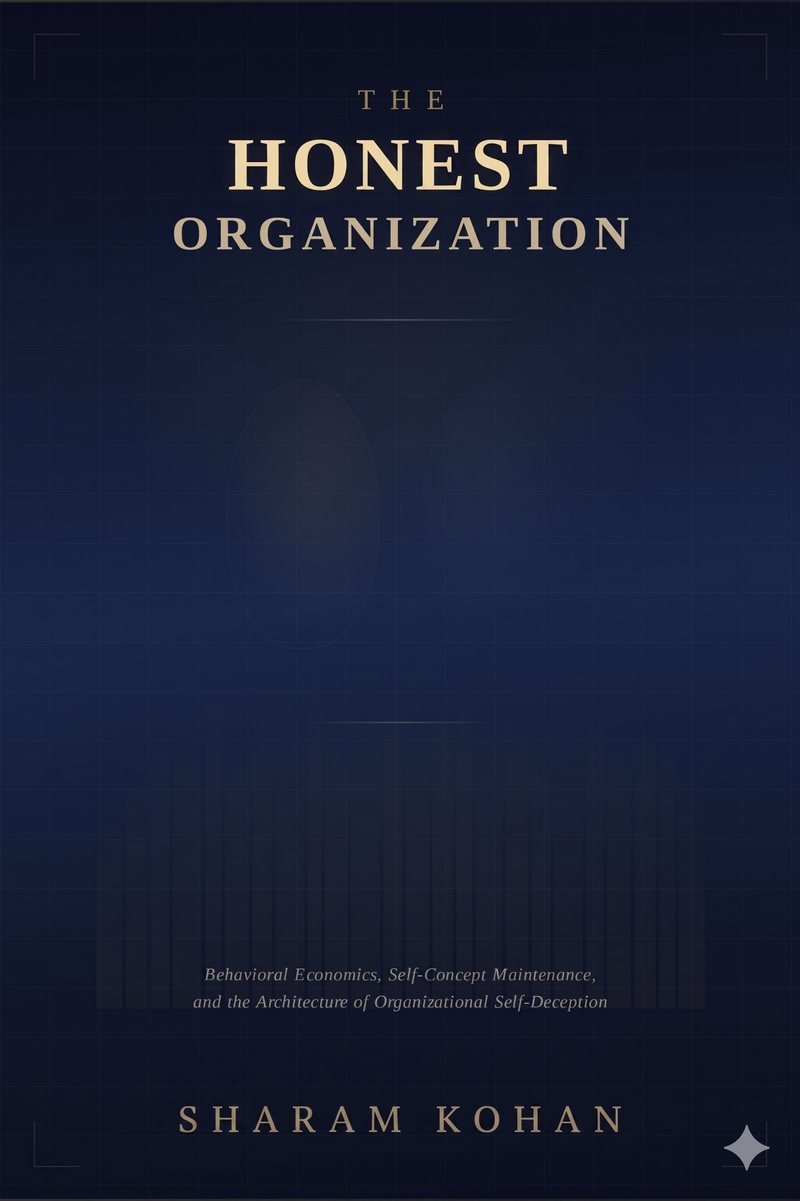
Your organization is not failing because it lacks information. It is failing because it is structured to ignore what it already knows.
What this book is about
You have watched a talented organization eliminate the people who told the truth, promote the people who caused the problem, and then hire a consultant to find out what went wrong. You do not need another book about leadership. You need to understand why the organization cannot stop.
The Honest Organization argues that the conventional explanation, that these organizations lack information, is wrong. They do not lack information. They lack the structural capacity to act on what they already know. This book explains the behavioral mechanisms that make that failure inevitable, and provides a structural design framework to correct it.
About the BookWho this book is written for
What you will find inside
The four mechanisms

Sharam Kohan
Sharam Kohan has spent more than twenty-five years inside the organizational machinery this book describes, not as a theorist, but as a principal actor who has built institutions, led them through crisis, and observed, at close range, the behavioral dynamics the book identifies and names.
He studied at Harvard University, where his work centered on leadership, institutional change, decentralized authority, and the management of people. He studied law at Temple University Beasley School of Law, concentrating in employment law and employment discrimination, and he is an alumnus of the University of California, Berkeley, School of Law, where he also earned a certificate in business law. He has held executive and human resources leadership positions across healthcare, technology, manufacturing, hospitality, retail, and the nonprofit sector. His full biography sets out how that record produced the argument of this book.
Full BiographyThe Honest Organization
Available as an e-book on Amazon. Published by Doxprint LLC, 2026. ISBN 979-8-234-02650-7.